Flagship
Automate a Workflow
AI agents that run across your existing systems, with human control, evaluation, and KPIs you can measure.
Explore- Support desk triage
- Document and claims intake
- Sales research copilot
AI-first. Forward-deployed.
Forward-deployed engineers in your stack, from the first call through deploy.
Paid 2-week sprintGo/No-Gothen 6–8 week pilot
The jobs we take once the sprint says Go.
Flagship
AI agents that run across your existing systems, with human control, evaluation, and KPIs you can measure.
ExploreCursor, Lovable, Replit, or Bolt will help you ship. They will not watch uptime, rotate keys, or stay on the repo after users show up.
Where vibe-coded apps stall
01
It will help you ship. It will not page you, rotate keys, or restore a backup.
02
Env files in git, open buckets, unauthed admin. Fine until payments sit on the same repo.
03
No evals, no uptime watch. The first person to notice a hole is usually a customer.
Real projects told as problem, engineering, and result. Not vanity logos.

~50% faster projected development timeline
Audic turns ad scripts into studio-quality voiceovers across major Indian languages. Marketers and agencies ship localized audio without booking a recording session.
Read case study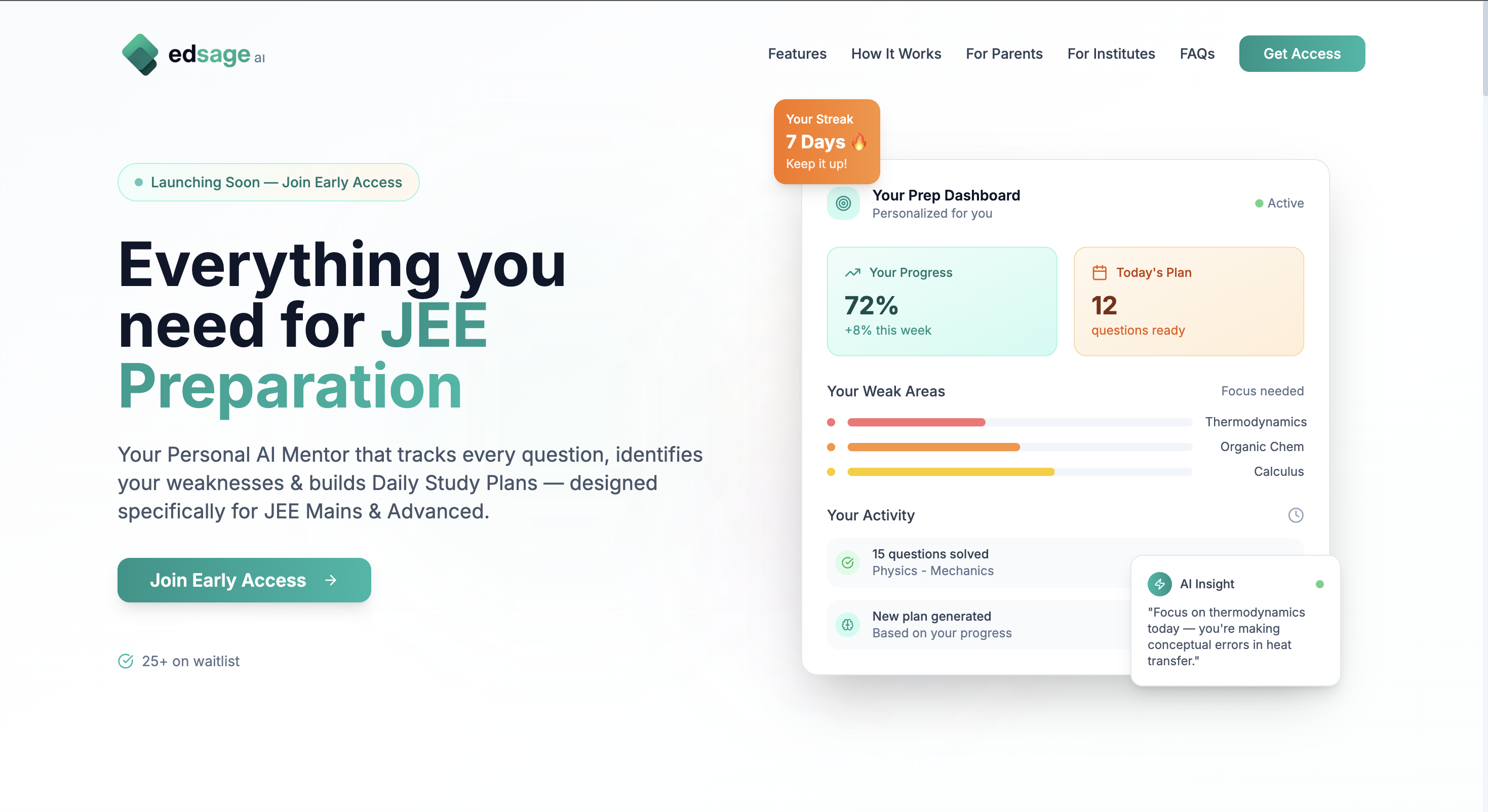
10k+ attempt events modelled
Edsage is a personal AI mentor for exam prep. Every question builds a profile, weaknesses show up early, and daily plans update from real performance instead of generic schedules.
Read case study
1B+ data points · ~90% match accuracy on product eval criteria
Doriot helps startups find aligned investors and run outreach with an AI copilot, so fundraising is targeted instead of spray-and-pray.
Read case studyMost failures are engineering and ownership problems, not model demos.
Where projects stall
The demo works in isolation. Production needs APIs, auth, data access, and real workflows.
Without evals, monitoring, and fallbacks, teams cannot trust the system with real users.
Knowledge is fragmented, access is unclear, and retrieval quality falls apart on real queries.
Models drift, costs rise, and nobody owns upgrades, incidents, or ongoing quality.
Why the lean studio
Every person here ships. No sales team between you and the engineer.
Hyderabad HQ · Global Timezone
About the studioWe don't sell workshops. A paid two-week sprint produces architecture, risks, and a Go/No-Go. If it will not work, we say so before you fund the build.
AI-first builders in your repos. No account-manager layer. No architect who only presents. The person on the intro call is the person who ships.
One problem at a time, in your APIs, data, and access rules. Not a parallel delivery org. Not a bench learning your codebase from a ticket queue.
Production means integration, evals, monitoring, fallbacks, and someone who still answers after launch. Vendor-neutral on models. Opinionated on that bar.
Ask an assistant who Neurocell is. It reads the public web. We don't edit the answer.
Every engagement starts with a paid architecture sprint. Pilot, scale, and ops only follow a Go.
Use case, data, integrations, and constraints. We say if a sprint is the right next step.
Paid ~2 weeks. One problem, architecture, risks, and an implementation plan. Go/No-Go before anyone funds the pilot.
About 6 to 8 weeks: build, integrate, evaluate, deploy, and hit agreed acceptance metrics.
Add integrations, workflows, teams, or features once the first system is proven in production.
Run and improve the live system: reliability, cost, quality, and model updates.
Access, encryption, evals, and human oversight are part of the build.
Security approachTrust stack
Built into delivery, not bolted on
Start with a two-week architecture sprint. We reply within 1 business day. Or email hello@neurocell.in.
Book a 2-week architecture sprintNeurocell is a production AI engineering studio in Hyderabad. Forward-deployed engineers take one AI pilot into a live system: a workflow, private knowledge AI, or an AI product feature. Work starts with a paid two-week architecture sprint and a written Go/No-Go. A 6–8 week pilot follows only if the sprint says Go.
It starts with a short technical call about the use case, the data, and the constraints. If a sprint is the right next step, that sprint is about two weeks, paid, and ends in architecture, risks, and a Go/No-Go. The build is not funded until that memo says Go.
Engagements start at $5,000. There are three fixed-fee plans. An architecture sprint is about two weeks and ends in a plan, acceptance metrics, and a Go/No-Go. A scoped production project is 6–8 weeks and only follows a Go. Follow-on scale is a new fixed scope after the first system is live. Anything above the $5,000 floor is quoted after a short call. See how we get hired.
Yes, when you want the system run. Evals, monitoring, cost control, and an owner stay after the demo. Managed operations is a separate engagement once the first system is live. The person who shipped it is still the person who answers.